
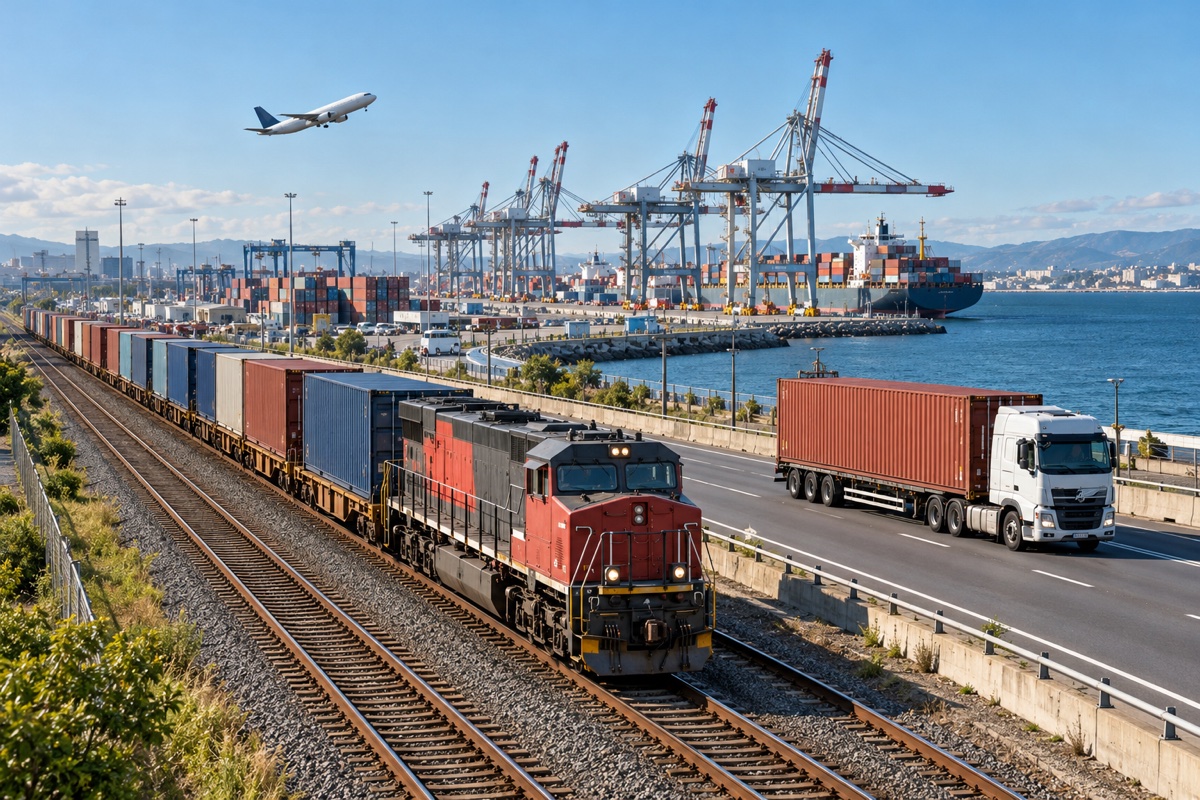
Air usually prioritizes speed, ocean prioritizes capacity and unit cost, rail can balance time and cost on supported Eurasian corridors, and road provides flexible regional or connecting transport. The right choice depends on door-to-door performance, not the main transport leg alone.
Quick comparison
| Mode | Often considered for | Important constraints |
|---|---|---|
| Air freight | Urgent, smaller, higher-value or stockout-sensitive cargo. | Chargeable weight, acceptance rules, capacity and airport handling. |
| Ocean freight | Heavy, bulky or planned replenishment by FCL or LCL. | Cut-offs, sailings, port handling, deconsolidation and inland delivery. |
| Rail freight | Supported China–Europe corridors where time/cost balance fits. | Terminal coverage, schedules, border handling and final trucking. |
| Road freight | Regional cross-border moves and flexible terminal or door connections. | Border conditions, permits, road capacity and destination coverage. |
Seven inputs required for a real comparison
Use actual pickup and final delivery locations, not only ports or airports.
Volume and chargeable weight can change the result completely.
State batteries, liquids, powders, magnets, value and temperature needs.
Work backward from when inventory must be usable, not just when it should arrive.
Clarify classification, value, documents and importing responsibilities.
Residential, warehouse, appointment, remote area and equipment requirements matter.
A better decision process
Identify the latest usable date and any product or destination restrictions.
Use packed dimensions and gross weight, not product estimates.
Include origin handling, main transport, customs, destination and final delivery.
Consider stockout impact, seasonal deadlines and the cost of arriving too early.
Decide when a delayed order should split, upgrade or switch route.
Use a split shipment when the numbers support it
A brand does not always need to choose one mode for the entire order. A smaller urgent quantity may move by air while the main replenishment moves by ocean or rail. Compare the stockout cost with the premium paid for the faster portion.